Browse all categories
03 / WINE

Wine

Q-NaQ-Na

Is red wine sweeter than white?

JoanneJoanne

Fermented grape juice. Skin contact contributes colour and tannin in reds. White, rosé, orange, sparkling and fortified wines also differ in production.

Reading sweetness
Dry to sweet; colour does not decide
A way to start
Choose acidity, tannin and body separately

Six clues to your next glass

Explore aroma, texture and serving style to find what you enjoy.

ABV

8–15% typical, excluding fortified styles

Check the bottle for its alcohol content. When mixing, consider both the measure and the mixer.

Sweetness

DrySweet

Dry to sweet

Sweet aromas and sugar are different clues. Colour alone does not tell you sweetness.

Acidity

GentleBright

Varies by grape and region

Distinguish acidity in the drink itself from acidity added by juice or mixers.

Aroma

Fruit, flowers, oak, ageing

Ideas for describing aromas; illustrated ingredients are not present in every product.

Texture

LightFull

Light to full; check tannin

A light finish or a rounded texture? Temperature and dilution can change the impression.

Serving

Chill white; avoid overly warm red

Start with the producer’s serving advice, then adjust temperature or water a little at a time.

The bands show dimensions of taste, not scores or positions for individual products.

THE DETAILS

Understand the styles

A history wider than western Europe

Wine’s story is not confined to France and Italy. In Georgia, traditional winemaking in large earthenware vessels called qvevri, buried in the ground, remains a living practice and was inscribed by UNESCO in 2013. Across regions, changes in farming, vessels and trade have shaped what people drink with their food. An appellation or place name is an invitation to explore that context, rather than a guarantee that every bottle will taste the same.

Colour comes from decisions

Red wines are usually fermented with grape skins, extracting colour and tannin. White wines generally focus on the juice; rosé may gain its colour through shorter skin contact. Skin-fermented white grapes produce the styles often called orange wines, with no oranges involved. Fermentation temperature, extraction and maturation matter alongside grape variety. Two wines from the same grape can therefore differ sharply in weight, aroma and texture.

Oak ageing and bottle ageing are different

Wood may contribute spice or toasted aromas, while stainless steel can help preserve a direct fruit character. Neither choice is automatically superior. Bottle ageing is a separate process, and many wines are intended to be enjoyed for their youthful freshness. Rather than equating age with quality, ask what the wine was made to express and whether its acidity, tannin and fruit fit the occasion.

Pair with the whole dish

The sauce can matter as much as the protein. Grilled fish with a rich sauce and gently steamed fish call for different approaches; roast chicken with lemon may suit a lively white. Treat familiar red-with-meat rules as starting points, not boundaries. In a warm room, a red wine may benefit from a little cooling. Keep simple notes on acidity, tannin and body: those observations are more useful for your next choice than trying to memorise every famous region at once.

Further reading: UNESCO · Qvevri wine-making · WSET · Wine styles

Q-NaQ-Na

What separates red, white and rosé?

JoanneJoanne

Red wine usually ferments with dark grape skins, extracting colour and tannin. White wine generally has less skin contact. Rosé can be made with shorter skin contact, among other methods. Colour alone cannot tell you whether a wine is sweet.

Q-NaQ-Na

Acidity, tannin and body are different

JoanneJoanne

Acidity gives freshness, tannin creates a drying sensation, and body describes weight in the mouth. For a gentler introduction, try less tannic styles. A full-bodied red is not necessarily sweet. Consider the sauce as well as the main ingredient when pairing.

Q-NaQ-Na

Orange, sparkling and fortified

JoanneJoanne

Orange wine is made from white grapes with skin contact. Sparkling wine contains bubbles and can be dry or sweet. Fortified wine has spirit added during production. Check the style, sweetness indication and ABV together; these terms describe different production choices.

Q-NaQ-Na

Dry and residual sugar

JoanneJoanne

Dry means low perceived sweetness, not spicy heat. Residual sugar remains after fermentation; acidity affects how sweet it tastes.

Q-NaQ-Na

Tannin, acidity and body

JoanneJoanne

Tannin brings drying grip, acidity brings freshness and salivation, and body is weight and fullness. They describe different sensations.

Q-NaQ-Na

Rosé and orange wine

JoanneJoanne

Rosé commonly uses brief dark-grape skin contact. Orange wine is skin-contact white wine, not wine made from oranges.

Q-NaQ-Na

Sparkling and fortified wine

JoanneJoanne

Sparkling wine contains carbon dioxide. Fortified wine has spirit added, as in Port or Sherry. Neither category is necessarily sweet.

Q-NaQ-Na

The smaller the barrel, the louder the wood

A barrique, the barrel used for ageing wine, holds 225 litres. Compared with a large cask, more wood touches the same amount of liquid, so the wood’s aroma and compounds arrive faster and stronger. A new barrel pushes clear vanilla and toasted notes; by its second and third fill it has calmed down. Producers therefore decide what share of new barrels to use as part of building the flavour. Grappa can be barrel-aged too, turning amber and rounder in the nose than the clear style. Too much wood buries the fruit, so judging the balance is where the winemaker’s skill shows.

Q-NaQ-Na

A corked bottle is nobody’s mistake

Sometimes an opened bottle smells of damp cardboard or mouldy wood, and the fruit has gone missing. This is cork taint, thought to come from a tiny trace of a compound linked to the cork. The wine is not spoiled in the sense of going bad; what happens is that the aroma gets muted. It is not the fault of the producer or the shop, and in a restaurant you can normally say so and get another bottle. That quick sniff of the cork on opening is there for this reason. One big reason screw caps have spread is that they sidestep the problem altogether.

GRAPES / ORIGINS / STYLES

Grapes offer clues, not guarantees

Chardonnay changes markedly with oak treatment; Sauvignon Blanc often suggests citrus and fresh herbs; Riesling combines lively acidity with styles ranging from dry to sweet. For reds, compare Cabernet Sauvignon’s black-fruit and tannin profile with Pinot Noir’s red-fruit character and often lighter body. Climate, harvest timing and winemaking can reshape every one of these tendencies.

Sparkling names describe origin and method

Champagne is a protected designation from its defined French region. Chardonnay, Pinot Noir and Meunier dominate; second fermentation in bottle and lees ageing shape the style. Prosecco comes from designated areas of northeastern Italy, with Glera at its core; typical sparkling examples use pressurised-tank fermentation and foreground pear and floral notes. Spain’s Cava uses second fermentation in bottle, traditionally with Macabeo, Xarel·lo and Parellada. These distinctions describe origin and production, not a universal quality ranking.

Discovering Japan Wine

Under Japan’s labelling rules, Japan Wine is made in Japan exclusively from grapes harvested in Japan. It differs from domestically manufactured wine made with imported juice or wine. Koshu and Muscat Bailey A provide useful starting points, alongside international varieties grown across regions including Yamanashi, Nagano, Hokkaido and Yamagata. Look for the grape’s origin as well as the winery’s address; the country name alone cannot predict flavour.

From the label to the table

Check origin, grape, sweetness and alcohol together. On sparkling labels, Extra Dry is sweeter than Brut despite the wording. Begin food comparisons with the intensity of the sauce: lightly seasoned fish suggests a different starting point from sweet soy-based pork. Treat pairings as experiments, since bottle style, temperature and seasoning change the result.

Sources: WSET · Comité Champagne · Prosecco DOC · D.O. Cava · 国税庁

AT THE TABLE

Start with the food.

Six Japanese, six Western and six Chinese or Taiwanese ideas: everyday meals, ready-to-serve snacks and a few sweet surprises. Choose the food, then explore a serving style.

Start with supermarket cheese, plain crisps or roast chicken. Frozen edamame and dumplings are practical introductions to the Japanese and Chinese dishes; a tea egg or glazed rice dumpling adds something less expected.

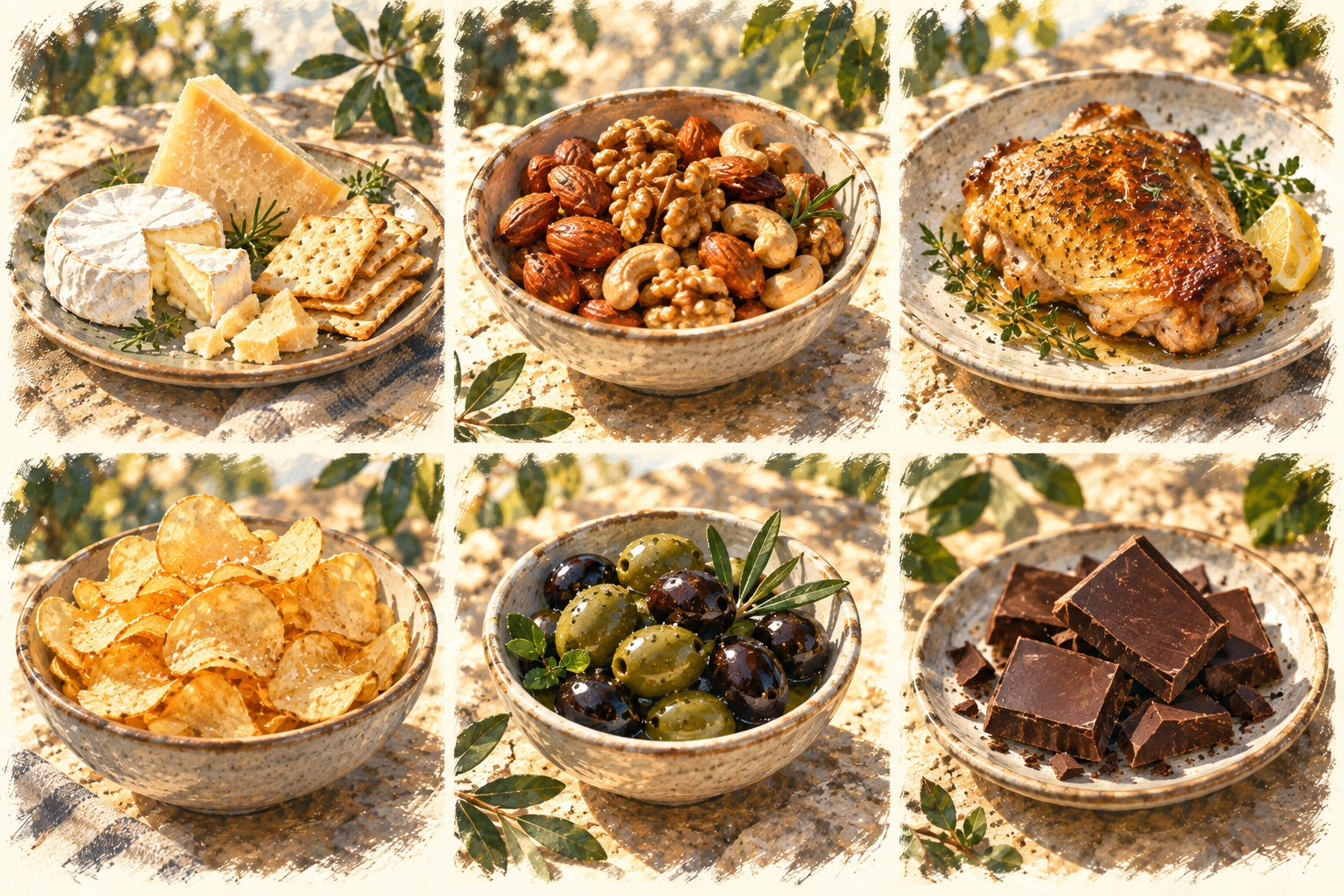
Western food & easy snacks 6 ideas

Cheese board

A local mild hard cheese or soft white cheese is a useful start; compare stronger cheeses later.

Try it withA lighter-bodied red wine

Taste a little of the aromatic drink alongside the dish’s richness and umami. Adjust temperature or dilution if it dominates.

Roasted mixed nuts

Start with unsalted almonds and walnuts, focusing on the roast rather than flavoured coatings.

Try it withA lighter-bodied red wine

Explore the food’s grilled or toasted notes alongside the drink’s aroma. Start with moderate char and salt.

Herb roast chicken

A supermarket roast is fine. Let the herbs and browned skin lead, with sauce on the side.

Try it withA lighter-bodied red wine

Explore the food’s grilled or toasted notes alongside the drink’s aroma. Start with moderate char and salt.

Plain potato crisps

Choose lightly salted chips or crisps. Strong flavour powders can hide the potato's toasted flavour.

Try it withChilled dry white wine

Try a fresher serving against the rich coating and oil. Serve chilli sauce separately to make comparison easier.

Olives

Jarred or deli olives are easy to serve. Drain the brine and taste a few at a time.

Try it withChilled dry white wine

Try a lighter serving with green aromas and salt. Keep sharply acidic dressings modest at first.

Dark chocolate

A bar or individually wrapped pieces both work. Begin with cocoa that is not intensely bitter.

Try it withA sweet dessert wine

A small after-dinner experiment: alternate a bite and a sip, checking that bitterness does not overwhelm the sweetness.

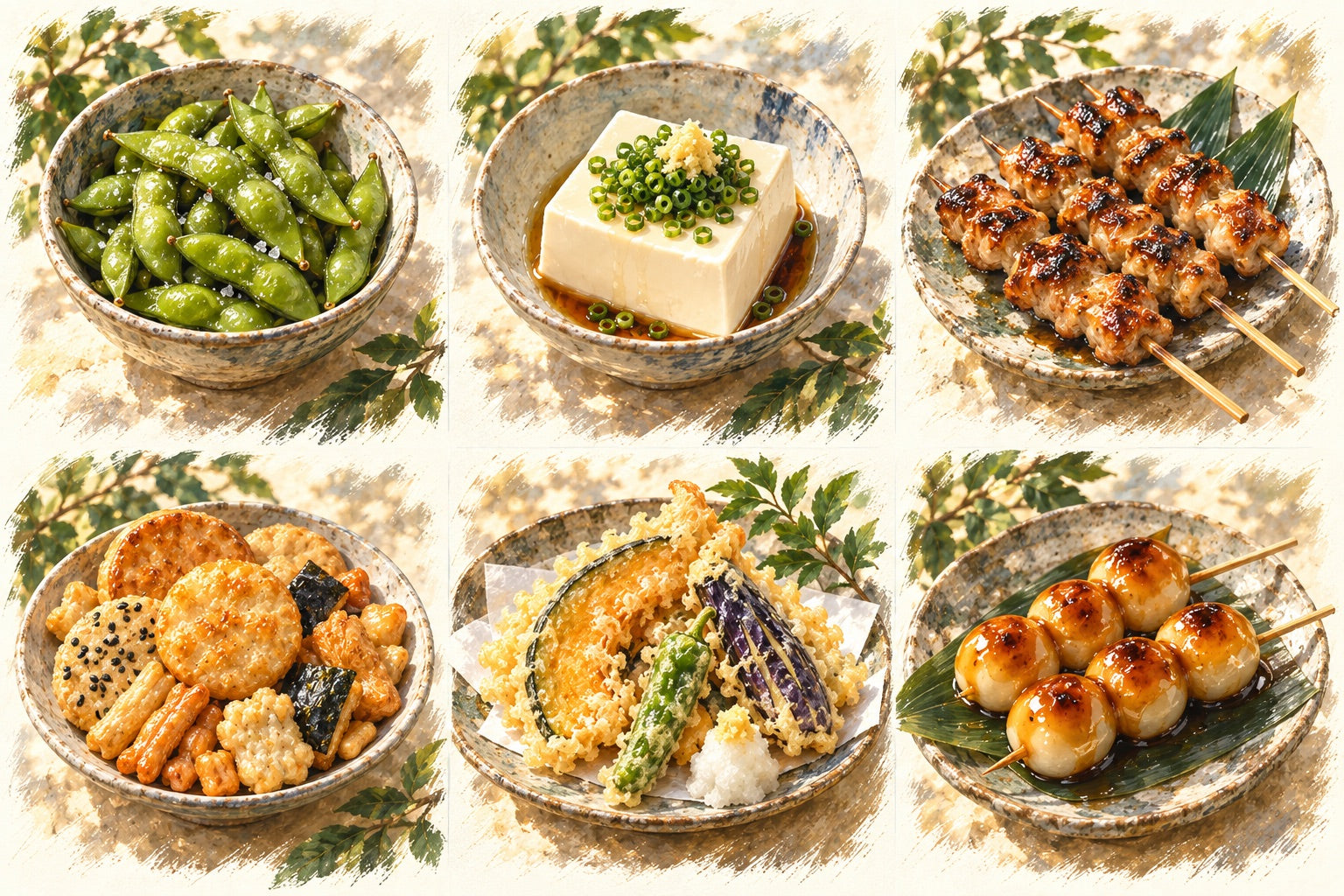
Japanese 6 ideas

Edamame

Frozen pods work well. Use a little salt so the beans keep their gentle sweetness.

Try it withChilled dry white wine

Try a lighter serving with green aromas and salt. Keep sharply acidic dressings modest at first.

Chilled silken tofu

Top soft tofu with spring onion and ginger; keep soy sauce light.

Try it withChilled dry white wine

Keep the gentle savoury flavours in focus. Sip a little and adjust the strength so the food stays distinct.

Yakitori chicken skewers

Ready-cooked skewers work too. Choose salt for a lighter bite or glaze for sweet, savoury char.

Try it withA lighter-bodied red wine

Explore the food’s grilled or toasted notes alongside the drink’s aroma. Start with moderate char and salt.

Japanese rice crackers

Tip a packet into a bowl. Plain salted or soy-seasoned crackers make the toasted rice easy to taste.

Try it withA lighter-bodied red wine

Explore the food’s grilled or toasted notes alongside the drink’s aroma. Start with moderate char and salt.

Vegetable tempura

Try pumpkin, aubergine and green pepper. Begin with salt rather than a heavy dipping sauce.

Try it withChilled dry white wine

Try a fresher serving against the rich coating and oil. Serve chilli sauce separately to make comparison easier.

Mitarashi dango

Skewered rice dumplings with a sweet soy glaze. Try one after dinner with a small pour.

Try it withA sweet dessert wine

A small after-dinner experiment: alternate a bite and a sip, checking that bitterness does not overwhelm the sweetness.

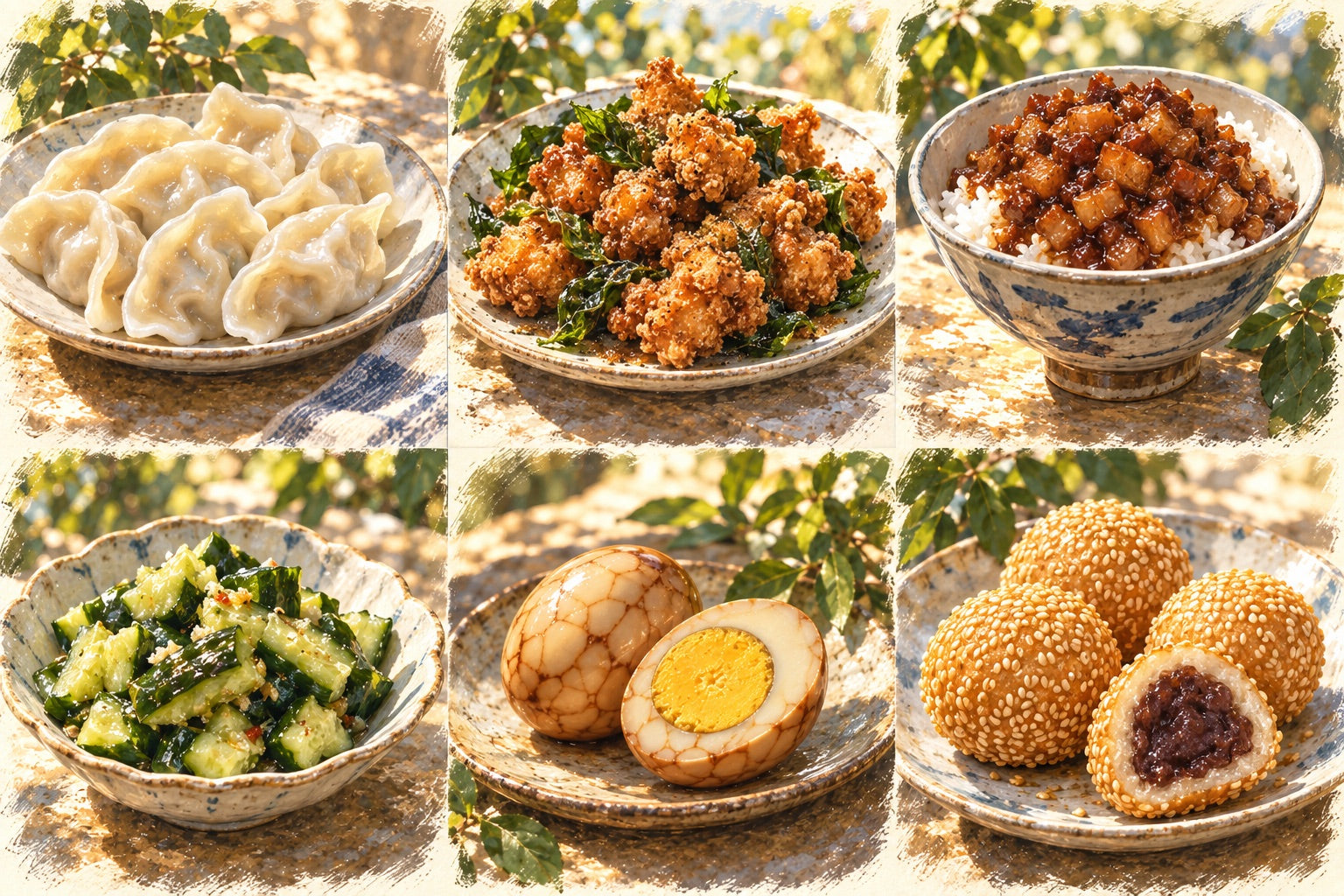
Chinese & Taiwanese 6 ideas

Boiled dumplings

Frozen dumplings are practical. Taste the wrapper and filling before adding vinegar or chilli oil.

Try it withChilled dry white wine

Keep the gentle savoury flavours in focus. Sip a little and adjust the strength so the food stays distinct.

Taiwanese popcorn chicken

Pepper and basil give this fried chicken its character. Plain popcorn chicken with pepper is an easy alternative.

Try it withChilled dry white wine

Try a fresher serving against the rich coating and oil. Serve chilli sauce separately to make comparison easier.

Lu rou fan: braised pork rice

Sweet-savoury braised pork over rice. Adjust the drink to the strength of the sauce and star anise.

Try it withA lighter-bodied red wine

Taste a little of the aromatic drink alongside the dish’s richness and umami. Adjust temperature or dilution if it dominates.

Smashed cucumber

Dress crushed cucumber with a little salt and sesame oil; go easy on garlic and vinegar.

Try it withChilled dry white wine

Try a lighter serving with green aromas and salt. Keep sharply acidic dressings modest at first.

Tea eggs

Eggs simmered with tea and soy. A ready-made soy-marinated egg is an accessible alternative.

Try it withA lighter-bodied red wine

Taste a little of the aromatic drink alongside the dish’s richness and umami. Adjust temperature or dilution if it dominates.

Sesame balls

Ready-made or frozen sesame-coated dumplings work well. Enjoy the sesame and sweet bean filling after dinner.

Try it withA sweet dessert wine

A small after-dinner experiment: alternate a bite and a sip, checking that bitterness does not overwhelm the sweetness.

Illustrations show serving ideas. Seasoning and the style of the drink will change the pairing.